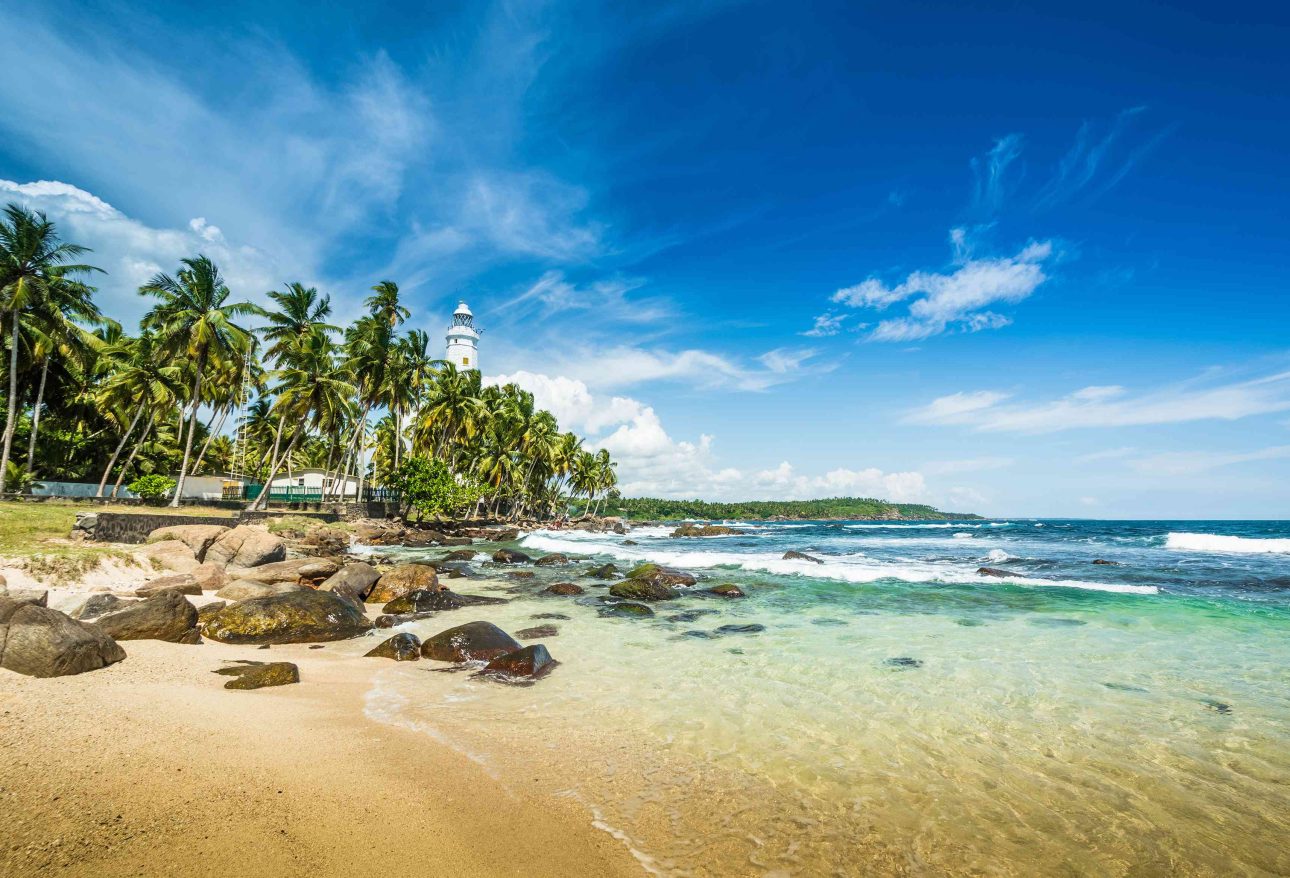
With 1,340 kilometers of coastline embracing the Indian Ocean, Sri Lanka offers beaches for every preference—from bustling surf towns to secluded crescents of golden sand where your footprints might be the only ones for miles. Add to this excellent diving, whale watching, and fresh seafood served steps from the water, and you understand why beach lovers consistently rank Sri Lanka among Asia’s finest coastal destinations.
Understanding Sri Lanka’s Coasts
Sri Lanka’s distinct monsoon patterns mean that while one coast experiences rain, another basks in sunshine. This creates year-round beach weather somewhere on the island—you just need to know where to go when.
Southwest Coast (Colombo to Galle): Best from November to April. Popular, well-developed, and perfect for first-time visitors.
South Coast (Galle to Tangalle): Best from November to April. More laid-back than the southwest, with stunning beaches and excellent surf.
East Coast (Trincomalee to Arugam Bay): Best from May to September. Less developed, offering an off-the-beaten-path vibe.
Northwest Coast (Kalpitiya): Year-round kitesurfing destination, best from November to March.
This guide focuses on the most spectacular and diverse coastal experiences Sri Lanka offers.
Mirissa: Where Whales and Beaches Meet
Mirissa perfectly balances beach relaxation with marine adventures. This crescent bay fringed with coconut palms offers golden sand, clear waters, and a social vibe without the overwhelming development found elsewhere.
The beach itself is lovely—calm waters ideal for swimming, palm-shaded areas for lounging, and beachfront restaurants serving fresh seafood and tropical cocktails. Sunset at Mirissa, with the sun sinking into the Indian Ocean while local fishermen navigate their traditional outriggers back to shore, provides that quintessential tropical experience.
But Mirissa’s real draw lies offshore. From November to April, blue whales—the largest animals ever to exist—migrate through waters just a few kilometers from shore. Dolphin pods, sometimes numbering in the hundreds, are also regularly spotted. Early morning whale watching tours (starting around 6 AM) offer high success rates, though the trip involves several hours on sometimes choppy waters.
For Non-Water Activities: Hike to Parrot Rock at the eastern end of the bay for panoramic views, or visit nearby Weligama to see stilt fishermen—though be aware this is now largely a tourist photo-op rather than an active fishing method.
Unawatuna: The Social Beach
Just a few kilometers from Galle, Unawatuna has evolved into one of Sri Lanka’s most popular beach destinations. The horseshoe bay offers protected waters ideal for swimming, with a vibrant social scene day and night.
During the day, snorkeling trips depart to nearby reefs, paddleboards glide across the bay, and sunbathers claim their spot on the sand. Come evening, beachfront restaurants light up, live music fills the air, and visitors from around the world gather to watch the sunset.
While development has intensified, Unawatuna retains charm. The jungle-covered hillside still frames one side of the bay, and traditional fishing boats rest on the sand between resort areas. For those seeking both beach and nearby cultural attractions (Galle Fort is just 20 minutes away), Unawatuna provides an excellent base.
Hidden Gem: Jungle Beach, accessible via a short trail or tuk-tuk ride from Unawatuna, offers a smaller, less crowded alternative with equally beautiful water.
Tangalle: Remote Paradise
As you travel east beyond Galle, beaches become progressively quieter and less developed. Tangalle represents the south coast at its most laid-back. Here, pristine beaches stretch for kilometers with minimal development, and the vibe shifts from social to serene.
Tangalle’s coastline comprises numerous bays and beaches. Goyambokka Beach offers gentle waters and dramatic rock formations. Marakolliya Beach extends far to the east, perfect for long, solitary walks. Hiriketiya Bay, with its perfect half-moon shape, has become popular with surfers but retains a relaxed atmosphere.
The waters around Tangalle harbor sea turtles, and several beaches serve as nesting sites. Walking the sand at dawn might reward you with the sight of hatchlings making their first dash to the ocean—though please maintain distance and never disturb nests.
Accommodation ranges from simple guesthouses to boutique resorts, but nothing approaches mass tourism. This is where you come to disconnect, read that novel, and remember what waves sound like.
Arugam Bay: Surf Paradise
For surfers, Arugam Bay is pilgrimage territory. Located on the east coast, this laid-back beach town offers some of South Asia’s best surf breaks. The main point break produces long, rideable waves suitable for intermediate to advanced surfers, while nearby spots like Pottuvil Point and Whiskey Point cater to different skill levels.
But you needn’t surf to appreciate Arugam Bay. The town exudes a relaxed, bohemian vibe. Beach bars serve fresh juices and seafood, yoga studios offer morning classes, and the 7-kilometer-long beach invites sunset strolls. The surrounding area includes Kumana National Park (excellent for bird watching) and ancient temples hidden in the jungle.
The surf season runs May to September, when the east coast receives ideal conditions. During peak season (July-August), the town buzzes with international surfers, but it never feels overcrowded.
Cultural Note: Arugam Bay is in a predominantly Muslim area. Modest dress away from the beach is appreciated, and alcohol availability is more limited than on the south coast.
Nilaveli and Uppuveli: Trincomalee’s Gems
The beaches near Trincomalee on the northeast coast remain wonderfully undeveloped compared to southern counterparts. Nilaveli, about 16 kilometers north of Trincomalee, features pristine white sand and crystal-clear waters stretching for kilometers.
Pigeon Island National Park, just offshore from Nilaveli, offers Sri Lanka’s best snorkeling. The shallow reefs teem with tropical fish, and the island is home to hundreds of rock pigeons (hence the name). The water clarity is exceptional—often visibility exceeds 20 meters.
Uppuveli, closer to Trincomalee, is equally beautiful but more developed with better restaurant and accommodation options. Both beaches are ideal for those seeking tranquility, though be aware that jellyfish can occasionally be present (locals will advise).
The east coast season (May to September) coincides with whale watching opportunities in Trincomalee, making this an excellent option when the south coast experiences monsoons.
Kalpitiya: Kitesurfing Capital
The Kalpitiya peninsula on the northwest coast has emerged as Sri Lanka’s kitesurfing hotspot. Consistent winds from December to March create ideal conditions, while the flat lagoon waters provide perfect learning environments for beginners.
Even non-kitesurfers will appreciate Kalpitiya’s unique landscape—a narrow spit of land between a vast lagoon and the open ocean, with sand dunes and coconut groves. Dolphin watching tours in Kalpitiya Lagoon regularly encounter large pods of spinner dolphins, creating magical interactions as these playful creatures leap and spin around boats.
The area remains relatively undeveloped, with most accommodations being small beach camps or eco-lodges. This rustic charm appeals to adventurous travelers willing to trade luxury for authenticity and access to world-class wind sports.
Bentota: Watersports Central
For those wanting water activities beyond swimming and surfing, Bentota delivers. This resort town on the southwest coast offers jet skiing, windsurfing, water skiing, wakeboarding, banana boat rides, and parasailing. The Bentota River provides opportunities for kayaking and river safaris through mangrove forests.
While less “undiscovered” than other destinations, Bentota’s combination of beautiful beach, calm waters, and activity options makes it ideal for families and those who prefer some structure and variety in their beach holiday.
Several turtle hatcheries operate in Bentota, offering a chance to learn about conservation efforts and see various turtle species up close—though research carefully, as some facilities have better animal welfare practices than others.
Galle: Where History Meets the Sea
While not strictly a beach destination, Galle deserves mention for its unique coastal position. The UNESCO-listed Galle Fort, built by Portuguese and expanded by Dutch colonizers, sits on a promontory jutting into the Indian Ocean.
Walking the fort walls at sunset, with waves crashing against ancient bastions below and the call to prayer echoing from the mosque within, creates an unforgettable experience. The fort interior features boutique hotels, cafes, art galleries, and shops—colonial architecture beautifully restored and repurposed.
Galle serves as an excellent base for exploring nearby beaches while offering cultural depth and dining sophistication often missing from pure beach towns.
Practical Beach Information
Swimming Safety: Currents can be strong along Sri Lankan beaches. Always swim at beaches with lifeguards when possible, observe local swimmers for safe areas, and heed warning flags. Rip currents are common—if caught in one, swim parallel to shore rather than fighting directly against it.
Sun Protection: Equatorial sun is intense. Use high-SPF sunscreen, reapply regularly, and seek shade during midday hours. Even on cloudy days, UV levels remain high.
Beach Etiquette: While bikinis are acceptable on tourist beaches, topless sunbathing is not. When leaving the beach to enter towns or restaurants, cover up with a sarong or shirt. This shows respect for local culture.
Monsoon Realities: During off-season, beaches can experience rough seas, strong winds, and heavy rain. Swimming may be dangerous. However, you’ll often have beaches nearly to yourself, accommodation prices drop significantly, and the dramatic weather has its own appeal.
What to Pack:
- Reef-safe sunscreen
- Rash guard for water activities
- Water shoes (coral and sea urchins present at some beaches)
- Dry bag for valuables
- Snorkel gear (available to rent, but your own ensures better fit)
Why Choose Lush Lanka Tours for Your Coastal Adventure?
The beauty of working with Lush Lanka Tours is flexibility. Since beach conditions vary with seasons and weather, we adapt your itinerary to ensure you experience Sri Lanka’s coast at its best. If you’re visiting in August and dream of whale watching, we’ll route you through Trincomalee on the east coast rather than Mirissa in the south.
We’ve explored every corner of Sri Lanka’s coastline and know which beaches suit different preferences—whether you want surf, snorkeling, solitude, or social scenes. Our local connections ensure you access the best whale watching boats, most reliable surf instructors, and restaurants serving the freshest catch.
We also understand that beach destinations work best when approached leisurely. Our itineraries build in genuine relaxation time rather than rushing from one beach to the next. After all, paradise doesn’t come with a schedule.
The Call of the Waves
Sri Lanka’s beaches offer more than sun, sand, and surf—though all three are world-class. They provide opportunities to disconnect from the modern world, to measure time by tides rather than clocks, to remember that joy can be as simple as warm sand between your toes and salt air on your skin.
Whether you’re watching the sun rise over the Indian Ocean from a deserted beach in Tangalle, sharing waves with sea turtles in Mirissa, or sipping a fresh coconut in the shade at Arugam Bay, Sri Lanka’s coast delivers paradise found.
Ready to discover your perfect Sri Lankan beach? Contact Lush Lanka Tours today. We’ll help you find your stretch of sand—whether you seek adventure, relaxation, or both. Paradise is waiting, and the waves are calling your name.